Embedded Baby Cry Detection: Offline Cry Recognition SDK for Edge DevicesNEW
The Value of Cry Detection: Scenarios and Workflow
A baby's cry is both the primary way infants express needs and a direct signal of their condition. The core requirement is real-time cry monitoring with alerting and feedback — notify parents the moment crying starts, and support timely soothing. Demand is strongest at night and during brief absences from the crib.
Typical products: baby monitors, smart cameras, smart cribs, and in-car child presence detection (CPD). Modern baby monitors compete on 2K video, PTZ and night vision — yet nearly all of them remain passive: streaming video, expecting a human to watch. Adding on-device cry detection turns a passive camera into an active alerting device, and eliminates motion-alert fatigue from fans, curtains and passing parents.
The Acoustic Signature of Crying
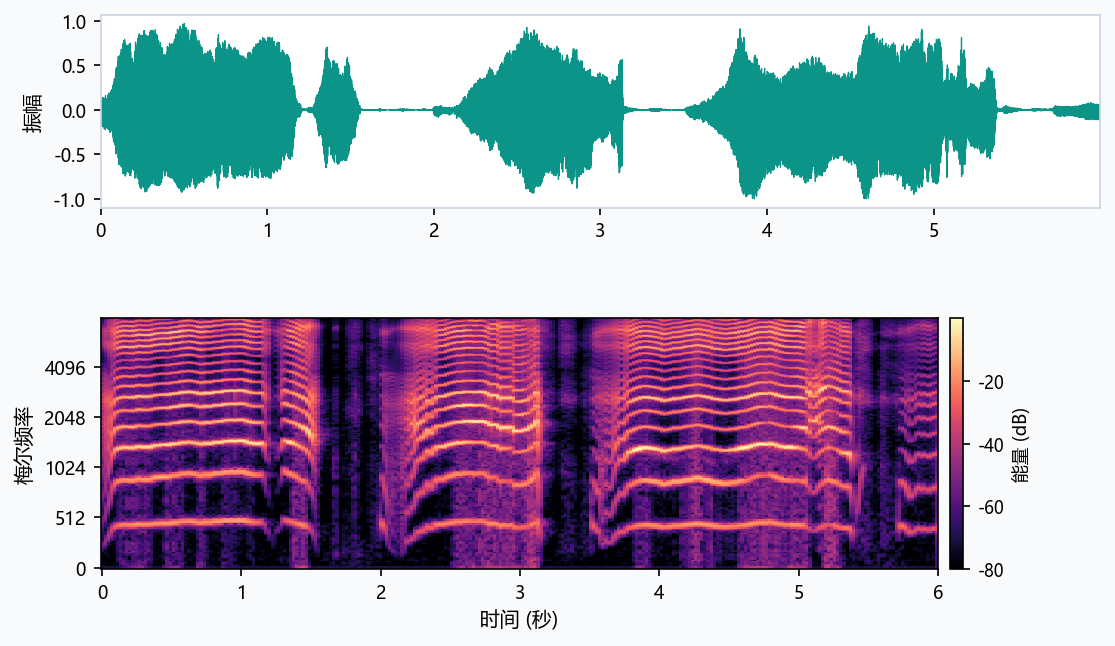
Below is a real cry recording — waveform (top) and Mel spectrogram (bottom), produced with the same 16 kHz preprocessing parameters the engine uses. The rise-and-fall envelopes and harmonic structure are clearly visible:
Audio samples (real recordings — press play):
🔊 Baby cry (real sample)
🔊 Cat meow — the closest confusion pair to crying
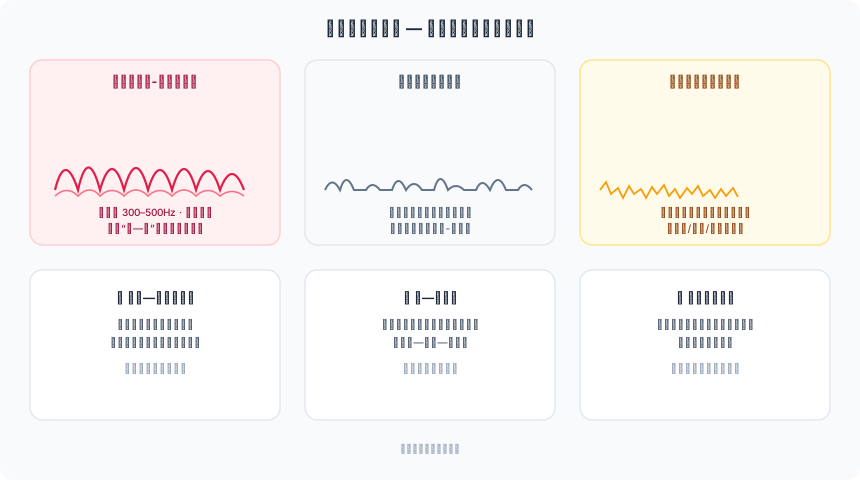
From the spectrum, a cry is a signal with a clear fundamental–formant structure: harmonic lines like musical notes, a fundamental typically between 300 and 500 Hz, and a distinctive rise-and-fall envelope that lasts a relatively long moment. By contrast, speech is broken into irregular bursts with frequent pauses, and environmental noise (TV, conversation, appliances) carries no stable fundamental at all.
This is why cry recognition leans on frequency-domain features first: the harmonic structure is the key evidence separating a cry from everything else.
How Recognition Works: Preprocessing → Features → Algorithms
Signal preprocessing
Adaptive noise suppression — — real homes contain TV audio, conversation and street noise; adaptive denoising estimates and removes the background in real time. In typical household noise, SNR improves by roughly **5–10 dB**
Endpoint detection and framing — — segment candidate events before analysis
Data augmentation (training) — — speed perturbation, noise mixing and RIR convolution broaden generalization
Feature extraction
Frequency domain — — FFT → Mel filterbank (denser filters at low frequencies, matching human hearing) → MFCC via cepstral analysis (DCT coefficients 2–13) for classical models, or FBank features for deep models that can learn finer detail directly
Time domain — — short-time energy, zero-crossing rate, energy entropy, chroma, each extended with delta / delta-delta
Recognition algorithms
Support Vector Machines perform well on small, high-dimensional datasets; Random Forests resist overfitting on noisy data; CNNs automatically learn local time-frequency patterns. In comparative experiments, a CNN + LSTM hybrid kept high accuracy while meeting real-time requirements. Transfer learning from pre-trained models accelerates convergence, and ensemble methods (SVM + RF + CNN voting) improve robustness further. A user-feedback channel continuously refines parameters in the field.
How the algorithms compare (2026 benchmark)
We evaluated mainstream approaches across five real-world noise conditions (12,000+ test clips):
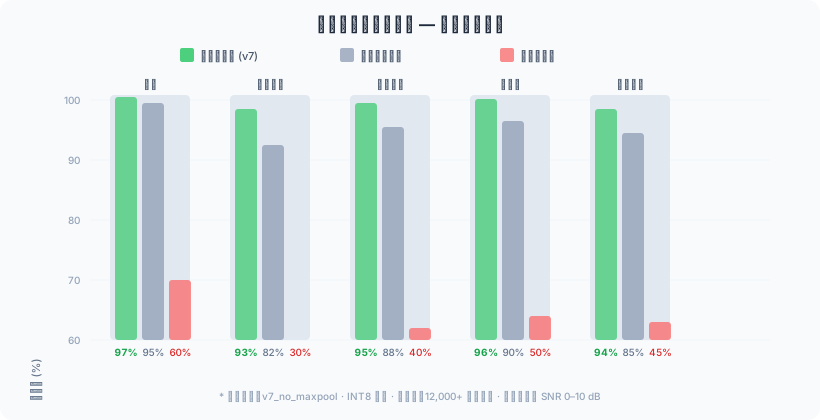
Key findings: lightweight CNNs on Mel-spectrogram input deliver the best accuracy-to-size ratio; data augmentation improves generalization by 3–5%; INT8 quantization cuts size 4× with under 1% accuracy loss; TV background remains the hardest condition for every method.
The Hard Parts of Cry Recognition
1. Individual variability — different babies have different frequency patterns, and the same baby changes with age, health and mood. Feature extraction must generalize across all of it.
2. Noise in real environments — TV, conversation, kitchen sounds. In noisy conditions, an unprotected recognizer's false-alarm rate can exceed 30%; with adaptive denoising and targeted negative training, we bring it below 5%.
3. Similar sounds — laughter and, notably, cat meows sit close to cries in the spectrum; dedicated discrimination is required (our cat model is trained bidirectionally against this).
4. Distance and position — 0.5 m to 5 m from crib to monitor; multi-distance training covers the range.
5. Multiple infants — twin monitors and daycare rooms include overlapping cries in the test set.
Accuracy and Performance
On our internal test set, accuracy reaches 97.2% with false alarms below 2% in real home conditions. For product selection, the criteria that matter: false-alarm rate, distance range, noise robustness, model size, inference latency, platform coverage and integration effort.
Note: performance figures are based on internal test environments; actual results depend on hardware and deployment scenarios.
Product Forms: Monitors, Cameras, In-Car CPD
Baby monitors — — active alerting instead of passive streaming; sound covers what video cannot (darkness, blankets, blind corners)
Smart cameras — — cry recognition distinguishes "baby needs you" from generic sound alerts
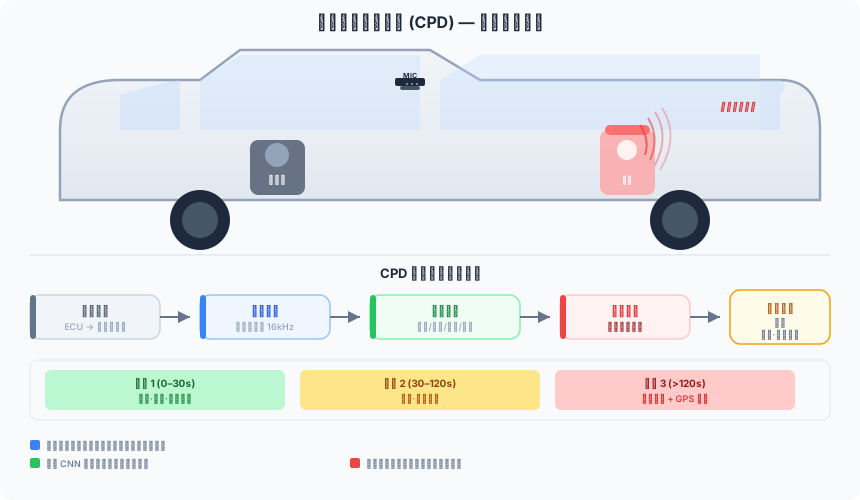
In-car CPD — — EU GSR mandates child presence detection for new vehicles from July 2026: detect a child left in the vehicle after engine-off and door-lock, escalate alerts in stages, work across all seating positions and extreme heat, all with false alerts low enough that drivers keep the system on
Platform and Hardware Requirements
The engine runs from 100 MHz-class chips upward — lightweight configurations fit in roughly 50–100 KB of memory, while the standard INT8 models stay within 0.2–1 MB. Supported platforms cover Windows / Linux / macOS / Android / iOS and RTOS targets, plus ARM v7/v8/v9, MIPS and x86_64 — the same SDK, from development boards to shipped products.
From Integration to Continuous Improvement
Integration follows the standard path: online trial → trial SDK → C API integration → field validation → volume licensing. In production, the user-feedback loop (false-alarm marking → sample回流 → regression → OTA update) is what keeps accuracy rising and false alarms falling over the product's lifetime.
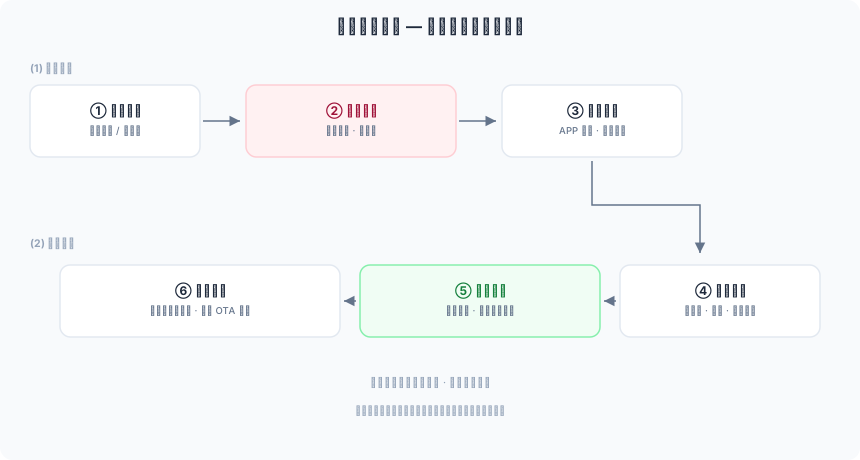
A complete monitoring loop looks like this: continuous listening → cry event detection → real-time notification (push with talk-back) → soothing response (white noise, light, two-way talk) → user feedback (false-alarm marking feeds samples back) → data accumulation and OTA model upgrades. Everything runs on the device; audio never leaves it.
C API and Embedded Integration
The cry detection library exposes a concise streaming C API: the caller just keeps feeding 16 kHz mono PCM; framing, Mel preprocessing and model inference run internally, and frame-level probabilities are aggregated by the alarm strategy into event callbacks.
Full interface declaration (cry_detect.h):
/**
 * cry_detect.h — 哭声识别统一接口
 *
 * 封装 Mel 预处理 + 推理引擎 + 报警策略, 内部模型消费线程处理音频。
 * 与录音模块 (audio_capture.h) 相互独立: 调用者自行决定音频来源
 * (录音回调 / wav 文件 / 网络流), 通过 cry_detect_feed 送入, 数据任意大小。
 *
 * 用法 (实时录音模式):
 *   cry_detect_t *d = cry_detect_create(mgk_path, NULL, NULL);
 *   cry_detect_set_listener(d, on_frame, on_onset, on_offset, NULL);
 *   cry_detect_start(d);                       // 启动内部模型消费线程
 *   audio_capture_start(rec, capture_cb, d);   // 录音回调里调 cry_detect_feed
 *   ...
 *   cry_detect_stop(d);                        // 排空缓冲, 停止线程
 *   cry_detect_destroy(d);
 *
 * 用法 (wav 文件模式):
 *   cry_detect_t *d = cry_detect_create(mgk_path, NULL, NULL);
 *   cry_detect_set_listener(d, on_frame, on_onset, on_offset, NULL);
 *   cry_detect_start(d);
 *   循环读文件: cry_detect_feed(d, pcm, n);    // 任意数据大小
 *   cry_detect_stop(d);
 *   cry_detect_destroy(d);
 */

#ifndef CRY_DETECT_H
#define CRY_DETECT_H

#include <stdint.h>

#ifdef __cplusplus
extern "C" {
#endif

/* 识别事件 (报警策略输出, 用于事件结束回调) */
typedef struct {
    float start_time;       /* 事件开始时间 (秒) */
    float end_time;         /* 事件结束时间 (秒) */
    float confidence;       /* 事件置信度 */
    float max_confidence;   /* 事件内最大帧置信度 */
    int   frame_count;      /* 事件持续帧数 */
} cry_detect_event_t;

/* 帧级回调: 每帧识别结果 (模型线程内执行) */
typedef void (*cry_detect_frame_cb_t)(float cry_prob, float timestamp,
                                      void *user_data);

/* 事件开始回调: 策略判定哭声开始, 只有开始时间 */
typedef void (*cry_detect_onset_cb_t)(float start_time, void *user_data);

/* 事件结束回调: 策略判定哭声结束 (或停止识别时未结束的事件), 完整事件信息 */
typedef void (*cry_detect_offset_cb_t)(const cry_detect_event_t *event,
                                       void *user_data);

typedef struct cry_detect_s cry_detect_t;

/* 创建/销毁; alarm_name/alarm_params 可传 NULL (用默认策略及参数) */
cry_detect_t *cry_detect_create(const char *mgk_path,      /* 模型文件路径 (必填) */
                                const char *alarm_name,    /* 报警策略名, NULL=默认 */
                                const char *alarm_params); /* 策略参数 key=val,key=val, NULL=默认 */
void cry_detect_destroy(cry_detect_t *det);

/* 设置事件回调 (create 后调用, 也可在运行中调整); 不需要的回调传 NULL */
void cry_detect_set_listener(cry_detect_t *det,
                             cry_detect_frame_cb_t  on_frame,
                             cry_detect_onset_cb_t  on_onset,
                             cry_detect_offset_cb_t on_offset,
                             void *user_data);

/* 启动/停止识别: 启动内部模型消费线程 / 排空缓冲后停止线程 */
int  cry_detect_start(cry_detect_t *det);
void cry_detect_stop(cry_detect_t *det);
int  cry_detect_is_running(cry_detect_t *det);

/* 设置事件识别策略 (可在运行中调整) */
int cry_detect_set_alarm(cry_detect_t *det, const char *alarm_name,
                         const char *alarm_params);

/* 送入 PCM 数据 (16bit 单声道 16kHz), 线程安全, 任意数据大小 */
int cry_detect_feed(cry_detect_t *det, const int16_t *pcm, int num_samples);

#ifdef __cplusplus
}
#endif

#endif /* CRY_DETECT_H */
A minimal WAV-inference demo (excerpt; the full file ships at src/cryDetect/v7_src/c/main.c):
#include <stdio.h>
#include <stdlib.h>
#include <stdint.h>
#include "cry_detect.h"

#define DEFAULT_MGK  "cry_detect_v7.mgk"  /* 模型文件 */
#define DEFAULT_WAV  "test_cry.wav"       /* 16kHz 单声道 16bit PCM */
#define FEED_CHUNK   16000                  /* 每次送入 1 秒音频 */

/* 帧级回调: 每帧输出哭声概率 (约 1 秒一帧) */
static void on_frame(float cry_prob, float timestamp, void *user_data)
{
    (void)user_data;
    printf("%8.2fs  cry=%.4f\n", timestamp, cry_prob);
}

/* 事件开始回调: 策略判定哭声事件开始 */
static void on_onset(float start_time, void *user_data)
{
    (void)user_data;
    printf("[EVENT] cry start at %.2fs\n", start_time);
}

/* 事件结束回调: 应用层可据此做后续统计或分级响应 */
static void on_offset(const cry_detect_event_t *ev, void *user_data)
{
    (void)user_data;
    printf("[EVENT] cry end at %.2fs (dur=%.2fs, conf=%.3f, frames=%d)\n",
           ev->end_time, ev->end_time - ev->start_time,
           ev->confidence, ev->frame_count);
}

static int read_wav_pcm(const char *path, int16_t **pcm, int *n, int *sr);  /* 完整实现见源文件 */

int main(void)
{
    cry_detect_t *det;
    int16_t *pcm = NULL;
    int num_samples = 0, sample_rate = 0;
    int pos;

    if (read_wav_pcm(DEFAULT_WAV, &pcm, &num_samples, &sample_rate) != 0)
        return 1;

    /* 1. 创建识别器: 模型文件 + 默认报警策略 (NULL) */
    det = cry_detect_create(DEFAULT_MGK, NULL, NULL);
    if (!det) return 1;

    /* 2. 注册回调 (均为可选) */
    cry_detect_set_listener(det, on_frame, on_onset, on_offset, NULL);

    /* 3. 启动内部模型消费线程 */
    cry_detect_start(det);

    /* 4. 分块送入 PCM; 实时录音时改在录音回调里 feed */
    for (pos = 0; pos < num_samples; pos += FEED_CHUNK) {
        int n = num_samples - pos;
        if (n > FEED_CHUNK) n = FEED_CHUNK;
        cry_detect_feed(det, pcm + pos, n);
    }

    /* 5. 停止并销毁 */
    cry_detect_stop(det);
    cry_detect_destroy(det);
    free(pcm);
    return 0;
}
Build and run:
$(CC) main.c -I. -L. -lcrydetect -lpthread -lm -o cry_detect_v7
./cry_detect_v7
Conclusion
Cry detection turns a baby product from a camera into a caretaker. If you are building a baby monitor, camera or CPD system, an online trial with full technical support is available.